Passport to Assassination

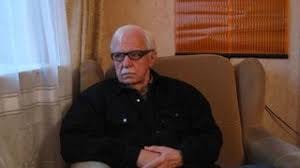
Photo: Oleg Nechiporenko
Passport to Assassination is the title of a 1993 book written by Oleg Nechiporenko, one of three (or four?*) KGB officers posing as diplomats in Mexico City who allegedly met with visa-seeking Lee Harvey Oswald two months before he assassinated JFK in Dallas, Texas.
One wonders why Nechiporenko, instead of concentrating on Oswald’s life in the USSR, etc., would write fifty pages about a KGB officer, Yuri Nosenko, who had nothing to do with the assassination, and the “stupid” CIA case officer who “misunderstood and mistreated” him so badly?
Nosenko had “defected-in place” to the CIA in Geneva in June 1962 and physically defected to the U.S. two months after the 11/22/63 assassination, claiming to have been Oswald’s case officer in Moscow and therefore knowing for sure that the KGB had nothing to do with the former Marine sharpshooter and U-2 radar operator during the two-and-one-half-years he lived half-a-mile from a KGB school in Minsk.
In those fifty pages, Nechiporenko says Nosenko’s primary case officer, Tennent H. Bagley, was stupid to not accept Nosenko as a true defector and to have incarcerated him and subjected him to harsh interrogations for more than three years.
In his 2007 book, Spy Wars: Moles, Mysteries, and Deadly Games, Bagley tells us how he became convinced Nosenko was a false defector when he read the CIA’s thick file on a defector by the name of Anatoliy Golitsyn and realized that the KGB cases Nosenko had told another CIA officer and himself about in Geneva a week earlier implausibly overlapped and contradicted the ones Golitsyn had recently told James Angleton, CIA’s Counterintelligence chief, about.
”Implausibly overlapped” because Golitsyn and Nosenko had worked in different parts of the highly compartmentalized KGB. “Contradicted” because Bagley realized that Nosenko had been sent to Geneva to protect a KGB “mole” or two in the Agency from being uncovered by Golitsyn’s information.
Bagley writes quite a lot about Nechiporenko’s book in Spy Wars.
Here are some excerpts:
Nosenko told us that the KGB had not known that Oswald was going around with Marina Prusakova. “There was no surveillance of her” until he applied to marry her. But a KGB file reported by KGB Colonel Oleg Nechiporenko (see below) revealed that the KGB checked on Marina as soon as she first met Oswald, on 17 March 1961.
. . . . .
An experienced KGB foreign-intelligence operative interviewed Oswald to judge his suitability for use as a spy. It didn’t matter that this KGB officer talked to Oswald under some guise, for the file would have revealed to Nosenko the KGB officer’s involvement, just as it had to Nechiporenko.
. . . . . . .
A KGB veteran told me after the Cold War that Nosenko did not hold the KGB jobs he listed for CIA and that the circumstances suggested to him that the SCD (specifically, its 14th Department, for operational deception) had dispatched Nosenko to deceive CIA. Quite a different story came from a clumsy KGB effort to support and enhance Nosenko’s image in American eyes. In the early 1990s they put an official hie on Nosenko into the hands of KGB veteran Colonel Oleg Nechiporenko. It was ostensibly to help him write a memoir of his encounter with Lee Harvey Oswald in Mexico City a few weeks before Oswald assassinated President Kennedy— never mind that Nosenko was entirely irrelevant to this subject. Nechiporenko thereupon devoted fifty pages— under the title “Paranoia vs. Common Sense’’— to make the point that CIA (and specifically me, Pete Bagley) had been stupid not to recognize the great good luck that had fallen into CIA’s lap with Nosenko’s defection. Like others, he stressed the “colossal damage” that this defection had done to the KGB and the near-panic it caused to high-level KGB chiefs and to Khrushchev himself. But the attempt backfired. That KGB file contradicted a lot of what Nosenko had told us about his early life and entry into the KGB, and Nechiporenko’s book told things about Oswald that Nosenko must have known if he had really had access to Oswald’s file — but did not know. [8]
Nechiporenko revealed that books like his own were actually parts of ongoing KGB operations. A West German editor complained to him, at about the time Nechiporenko’s own book was appearing, that another author, Oleg Tumanov, was refusing to fill in the details in his manuscript recounting his twenty years as a KGB penetration agent inside Radio Liberty. You are naive, Nechiporenko replied, to expect details. Tumanov, he explained, “was a link, a part of an operation . . . And this operation isn’t completed.” If the author were to tell all, “CIA would know what the KGB was doing today and tomorrow. The KGB is not dead.” [9]
Even if this still-living KGB was carrying on an unfinished operation, its use of Nechiporenko to attack me was like using a battering ram against an open door. CIA itself had disowned my position, had used some of the same words as Nechiporenko to denigrate me (and others who had distrusted Nosenko), and had been happily employing Nosenko for a quarter of a century. Why then this late, gratuitous assault? Could they still fear that CIA might reverse its position on Nosenko and finally look into the implications underlying his case? As far as I know, the KGB need have no fear on that front. Nechiporenko’s position in this ongoing KGB game contrasts oddly with the new line on Nosenko that was emerging in Moscow. After years of vilifying Nosenko for the damage he did the KGB and condemning him to death, KGB spokesmen were beginning to suggest that Nosenko did not defect at all. Their new line was that he fell into a trap and was kidnapped by CIA. After the assassination of President Kennedy, so this story goes, CIA learned (through what a KGB-sponsored article fantasized as a far-flung agent network in Russia) that a KGB officer named Nosenko had inside knowledge about Lee Harvey Oswald. So, when that target came to Geneva (to recruit a woman connected with French Intelligence) a CIA “action group” under Pete Bagley, working on direct orders from CIA director Richard Helms and Soviet Division chief David Murphy, drugged and kidnapped him, in order to pump him for information about Oswald’s sojourn in Russia. [10] One can only speculate on the KGB’s purpose in creating such a fantasy. Might they be preparing Nosenko ’s return to Russia without punishment like the later “CIA kidnap victim” Yurchenko? Whatever the reason, this change of posture reflected Moscow’s growing readiness to admit that Nosenko’s defection was not as previously presented. Finally, CIA will be left alone in believing in Nosenko.
. . . . . . . .
My comments:
*The two other KGB officers masquerading as diplomats who allegedly met with Oswald at the Soviet Consulate in Mexico City in 1963 on Friday the 27th and Saturday the 28th were Pavel Yatskov and Valery Kostikov.
It’s interesting to note that on 22 November 1993, “The National Enquirer” published an article by a fourth KGB officer who had allegedly met with Oswald at the Soviet diplomatic compound — Colonel Nikolai Leonov, who said Oswald interrupted warmups for a volleyball game on Sunday the 29th and that he and Oswald retired to his office where Oswald, desperately requiring a Soviet visa so he could return to Russia, started complaining about the FBI and ended up weeping and brandishing his revolver.
What’s interesting is that Leonov makes no mention of the “fact” that Oswald had allegedly said and done exactly the same things in front of Nechiporenko, Yatskov and Kostikov just the day before at the adjoining Soviet Consulate.
Even more interesting is the fact that Nechiporenko forgot to mention Leonov’s tête-à-tête with Oswald on Sunday.
In fact, Nechiporenko doesn’t even mention Third Secretary / Assistant Cultural Attache Leonov (who was Raul Castro’s and Che Guevara’s mentor, who supplied weapons to Communist insurgents in Latin America, and whom some believe was the short, skinny, blond-haired, very-thin-faced “Oswald” that Silvia Duran and Eusebio Azcue dealt with at the Cuban Consulate on or around 27 September 1963) in his book.
Questions:
Why did Leonov — aka “The Blond Oswald in Mexico City” — wait thirty years to mention his dramatic meeting with emotionally unstable Oswald on Sunday?
Was the KGB still trying to convince us in 1993 that there was no way that emotionally unstable Oswald could have fired his rifle accurately enough to kill JFK, and therefore . . . gasp . . . the evil, evil CIA or [fill in the blank] must have done it?
That’s it.
That’s the post.