Who betrayed BOURBON?

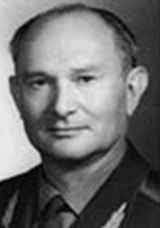
Photo: Dmitry Polyakov
Tennent H. Bagley wrote the following in his 2014 article, “Ghosts of the Spy Wars.”
My comments are in brackets.
“After a few months in New York, [as an ostensible informant to the FBI’s NYC field office, GRU Colonel Dmitry] Polyakov returned to Russia in the fall of 1962 and was not heard from until years later, when he told via a Moscow dead drop, that he would soon come out again. He did, in 1966, as Soviet military attaché and GRU chief in Rangoon, Burma. Because operations abroad are the CIA’s jurisdiction, the FBI soon turned over contact to the Agency, which continued to meet Polyakov in Burma from then until his tour of duty expired in 1969. In his early meetings with Polyakov, CIA case officer Jim F[lint] had the strong impression that he was dealing with a KGB plant, but after a time he noted such dramatic improvement in the reporting that he became convinced that Polyakov was genuinely cooperating. [Citation 17] For years thereafter, Polyakov continued direct and indirect contacts with the CIA, turning over priceless military and intelligence secrets first in Rangoon, then in Moscow, and then in two separate tours of duty in New Delhi where he enjoyed the rank of one-star general, making him the highest-ranked secret source that CIA ever had in Soviet Russia. But then, in May 1980, the operation came to an abrupt end. On the pretext of a supposed meeting of military attachés, Polyakov was recalled to Moscow and never heard from again. Ten years later, in 1990, out of the blue, the Soviets announced that they had arrested Polyakov, tried him in secret for being a CIA spy, and executed him. Their publicity chose to date the arrest as 1986, the trial and execution as March 1988. It took another dozen years to begin explaining these oddities: the secret trial, so unlike Penkovsky’s; the lack of even a fuzzy explanation of how the KGB had caught Polyakov; the inexplicable dates; and unusual publicity. The only KGB foreign-operations officer who had known of the SCD’s operation, General Sergey Kondrashev (the KGB deputy for disinformation mentioned above), years later revealed to me that Gribanov had sent Polyakov out in the first place. [Citation 18]
“But they executed Polyakov!”, I said. “Why would the KGB execute a man whom they themselves had sent out to commit this treason?”
“Because they found out he was giving you more than he was supposed to.”
“Found out? How?”
Kondrashev answered: “Through some source inside American Intelligence.”
He would say no more. But the question hung there: Who could have known exactly how much Polyakov was reporting to CIA? [Emphasis in original]
It had to be someone inside CIA’s Soviet operations staff. And someone still undiscovered. Two Americans who knew something of the Polyakov case were later discovered to have been traitors, but neither of them could be the answer. Robert Hanssen of the FBI had told the Soviets in 1979 about Polyakov’s 1962 cooperation in New York, but of course he knew nothing of what Polyakov later reported to the CIA. And even in the unlikely event that CIA traitor Aldrich Ames had learned the full details of Polyakov’s reporting, Ames did not begin betraying until 1985, five years after the KGB had recalled Polyakov on a ruse and terminated the operation.
Not one of the later-discovered CIA traitors could even remotely have been aware of these details. In fact, only a handful of specially placed CIA operatives even knew that the Agency had a relationship with Polyakov, much less what Polyakov was reporting. In each report that the CIA passed to military and other government agencies it disguised the source and attributed reports on different subjects to different sources.
The whole gamut of Polyakov’s reporting could have been known only to his CIA handlers and those dealing with his raw reports.
So, the question hangs: Who told the KGB what Polyakov was telling the CIA?
[Citation 17] As Jim F. told a close colleague on the operation, who told me in 1970.
[Citation 18] The circumstances of Kondrashev's revelation are described in Tennent H. Bagley, Spymaster, pp. 213–216.
. . . . . . .
Given the above excerpt and the fact that we know from the following excerpt from a 1978 CIA document that Soviet Division’s Reports and Requirements officer Leonard V. McCoy knew in 1967 that Flint was the case officer of Polyakov / BOURBON, it’s logical to assume that McCoy was handling — or at least privy to — the reports Flint was sending in on Polyakov.
Memorandum for the Record
16 October 1978
From: Leonard McCoy, Deputy Chief, CI Staff
Subject: Chronology of an Effort to Inspire Objective Review of the Nosenko Case
[…]
In early April 1967, as a result of a pro-Nosenko briefing I gave BOURBON case officer Flint, home on TDY, the Chief of the Soviet Russia Division learned that I had been to see Rufus Taylor about Yuri Nosenko. After investigating within the Division to determine the sources of information I had told Flint, C/SR called me in to advise me that he knew of my meeting with DDCI Taylor. After asking if there was anything personal in my opposition to his Nosenko stand, C/SR made a plea for better cooperation and understanding between us.
That’s it.
That’s the post.
PS As a friendly reminder, McCoy was a tenacious defender of false-defector-in-place in Geneva in June 1962 / false (or perhaps rogue) physical defector to the U.S. in February 1964 Yuri Nosenko, and the guy who, with help from probable mole Bruce Solie and McCoy’s long-term “useful idiot” (or worse) assistant, Cynthia Hausmann, lost former defector Nicholas Shadrin to KGB kidnappers in Vienna in 1975.